Product References
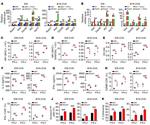
RAD21 amplification epigenetically suppresses interferon signaling to promote immune evasion in ovarian cancer.
The Journal of clinical investigation
Deng P,Wang Z,Chen J,Liu S,Yao X,Liu S,Liu L,Yu Z,Huang Y,Xiong Z,Xiao R,Gao J,Liang W,Chen J,Liu H,Hong JH,Chan JY,Guan P,Chen J,Wang Y,Yin J,Li J,Zheng M,Zhang C,Zhou P,Kang T,Teh BT,Yu Q,Zuo Z,Jiang Q,Liu J,Xiong Y,Xia X,Tan J
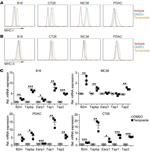
Published figure using OVA257-264 (SIINFEKL) peptide bound to H-2Kb monoclonal antibody (Product # 14-5743-82) in Flow Cytometry
Tue Nov 15 00:00:00 EST 2022
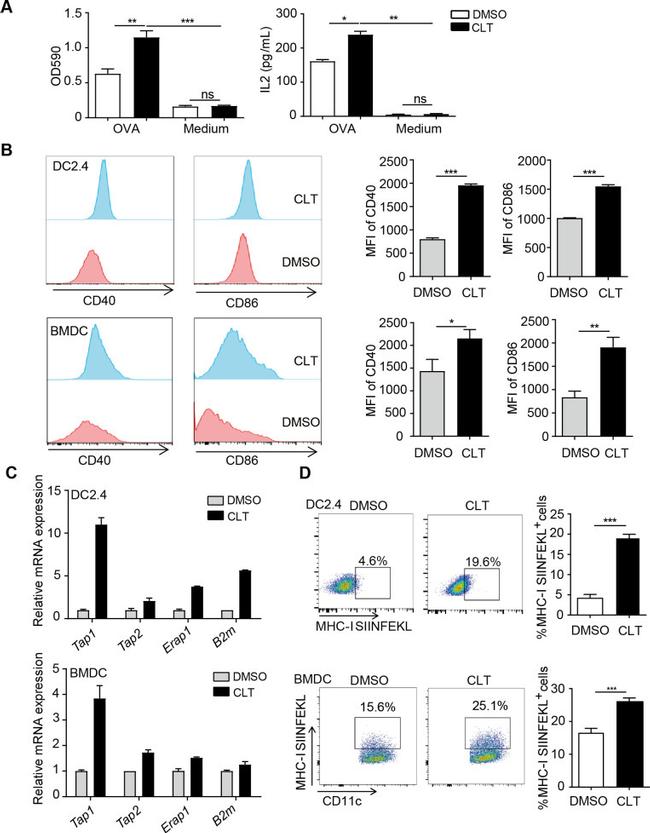
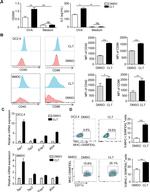
Modulation of lactate-lysosome axis in dendritic cells by clotrimazole potentiates antitumor immunity.
Journal for immunotherapy of cancer
Wang Z,Xu F,Hu J,Zhang H,Cui L,Lu W,He W,Wang X,Li M,Zhang H,Xiong W,Xie C,Liu Y,Zhou P,Liu J,Huang P,Qin XF,Xia X
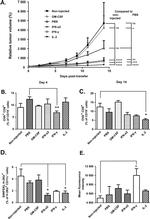
Published figure using OVA257-264 (SIINFEKL) peptide bound to H-2Kb monoclonal antibody (Product # 14-5743-82) in Flow Cytometry
Sat May 01 00:00:00 EDT 2021
Therapeutic modulation of phagocytosis in glioblastoma can activate both innate and adaptive antitumour immunity.
Nature communications
von Roemeling CA,Wang Y,Qie Y,Yuan H,Zhao H,Liu X,Yang Z,Yang M,Deng W,Bruno KA,Chan CK,Lee AS,Rosenfeld SS,Yun K,Johnson AJ,Mitchell DA,Jiang W,Kim BYS
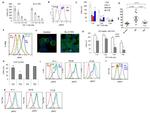
Published figure using OVA257-264 (SIINFEKL) peptide bound to H-2Kb monoclonal antibody (Product # 14-5743-82) in Flow Cytometry
Fri Mar 20 00:00:00 EDT 2020
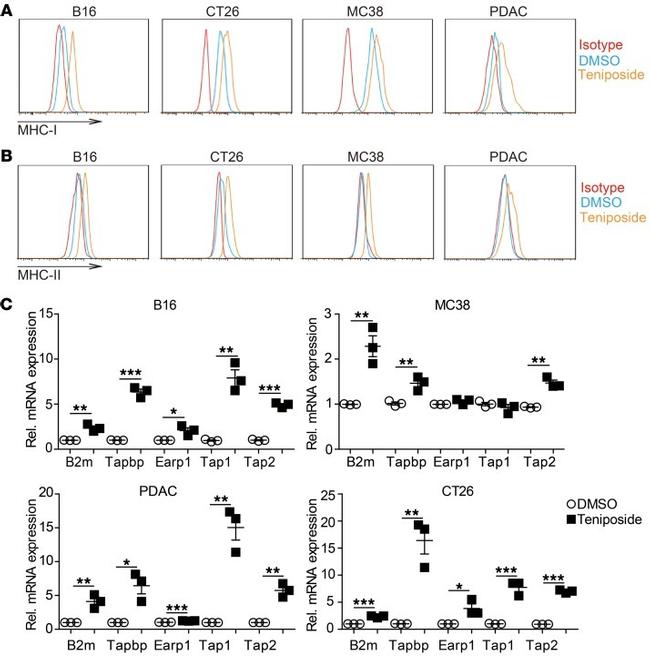
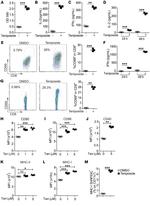
cGAS/STING axis mediates a topoisomerase II inhibitor-induced tumor immunogenicity.
The Journal of clinical investigation
Wang Z,Chen J,Hu J,Zhang H,Xu F,He W,Wang X,Li M,Lu W,Zeng G,Zhou P,Huang P,Chen S,Li W,Xia LP,Xia X
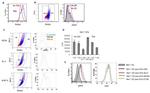
Published figure using OVA257-264 (SIINFEKL) peptide bound to H-2Kb monoclonal antibody (Product # 14-5743-82) in Flow Cytometry
Tue Aug 13 00:00:00 EDT 2019
Immunostimulatory nanomedicines synergize with checkpoint blockade immunotherapy to eradicate colorectal tumors.
Nature communications
Duan X,Chan C,Han W,Guo N,Weichselbaum RR,Lin W
14-5743 was used in Flow cytometry/Cell sorting to conclude that the intrinsically biodegradable, well tolerated, and systemically available immunostimulatory NCP promises to enter clinical testing as an immunotherapy against colorectal cancer.
Tue Apr 23 00:00:00 EDT 2019
T Cell Priming by Activated Nlrc5-Deficient Dendritic Cells Is Unaffected despite Partially Reduced MHC Class I Levels.
Journal of immunology (Baltimore, Md. : 1950)
Rota G,Ludigs K,Siegert S,Tardivel A,Morgado L,Reith W,De Gassart A,Guarda G
14-5743 was used in Flow cytometry/Cell sorting to show that Nlrc5 deficiency is not sufficient to hinder T cell activation, highlighting the robustness of the T cell priming process by activated dendritic cells.
Fri Apr 01 00:00:00 EDT 2016
Trogocytosis-associated cell to cell spread of intracellular bacterial pathogens.
eLife
Steele S,Radlinski L,Taft-Benz S,Brunton J,Kawula TH
14-5743 was used in Flow cytometry/Cell sorting to study trogocytosis-associated cell to cell spread of intracellular bacterial pathogens.
Sat Jan 23 00:00:00 EST 2016
Favorable alteration of tumor microenvironment by immunomodulatory cytokines for efficient T-cell therapy in solid tumors.
PloS one
Tähtinen S,Kaikkonen S,Merisalo-Soikkeli M,Grönberg-Vähä-Koskela S,Kanerva A,Parviainen S,Vähä-Koskela M,Hemminki A
Published figure using OVA257-264 (SIINFEKL) peptide bound to H-2Kb monoclonal antibody (Product # 14-5743-82) in Flow Cytometry
Thu Apr 28 00:00:00 EDT 2016
Thymoproteasomes produce unique peptide motifs for positive selection of CD8(+) T cells.
Nature communications
Sasaki K,Takada K,Ohte Y,Kondo H,Sorimachi H,Tanaka K,Takahama Y,Murata S
14574382 was used in flow cytometry to propose that thymoproteasomes contribute to the positive selection of CD8 positive T cells by preferentially producing low-affinity T-cell receptor ligand peptides
Tue Jun 23 00:00:00 EDT 2015
Profiling lymphocyte interactions at the single-cell level by microfluidic cell pairing.
Nature communications
Dura B,Dougan SK,Barisa M,Hoehl MM,Lo CT,Ploegh HL,Voldman J
14-5743 was used in Flow cytometry/Cell sorting to describe a microfluidic platform that achieves high-throughput deterministic pairing of lymphocytes with a defined contact time.
Tue Jan 13 00:00:00 EST 2015
mRNA Structural constraints on EBNA1 synthesis impact on in vivo antigen presentation and early priming of CD8+ T cells.
PLoS pathogens
Tellam JT,Zhong J,Lekieffre L,Bhat P,Martinez M,Croft NP,Kaplan W,Tellam RL,Khanna R
14-5743 was used in Flow cytometry/Cell sorting to provide insight into how viruses exploit mRNA structure to downregulate synthesis of viral maintenance proteins and delay antigen-specific T-cell priming.
Wed Oct 01 00:00:00 EDT 2014
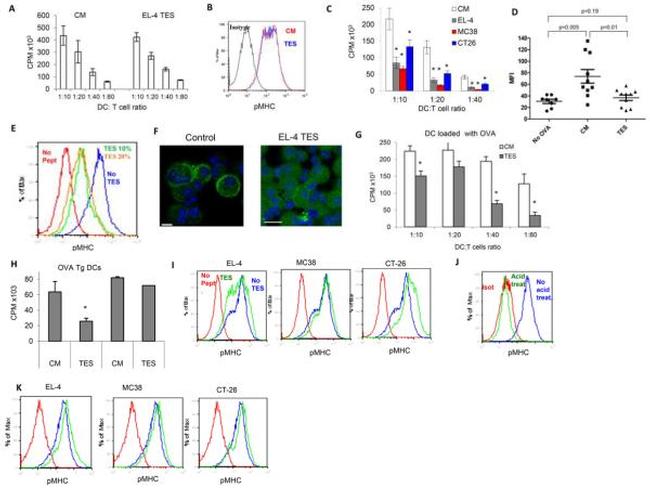
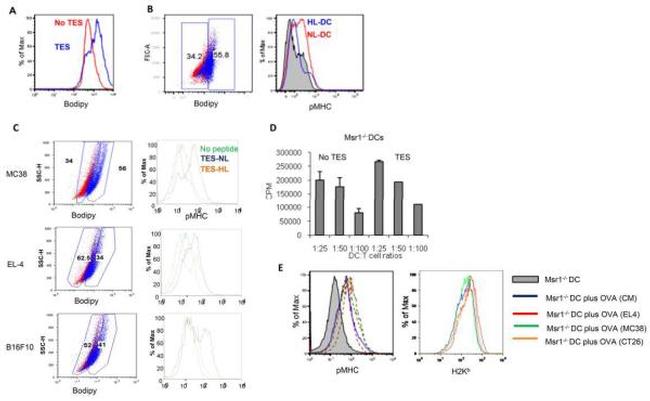
Oxidized lipids block antigen cross-presentation by dendritic cells in cancer.
Journal of immunology (Baltimore, Md. : 1950)
Ramakrishnan R,Tyurin VA,Veglia F,Condamine T,Amoscato A,Mohammadyani D,Johnson JJ,Zhang LM,Klein-Seetharaman J,Celis E,Kagan VE,Gabrilovich DI
14-5743 was used in Immunohistochemistry to show that oxidised lipids block antigen cross-presentation by dendritic cells in cancer.
Sat Mar 15 00:00:00 EDT 2014
Oxidized lipids block antigen cross-presentation by dendritic cells in cancer.
Journal of immunology (Baltimore, Md. : 1950)
Ramakrishnan R,Tyurin VA,Veglia F,Condamine T,Amoscato A,Mohammadyani D,Johnson JJ,Zhang LM,Klein-Seetharaman J,Celis E,Kagan VE,Gabrilovich DI
14-5743 was used in Immunohistochemistry to show that oxidised lipids block antigen cross-presentation by dendritic cells in cancer.
Sat Mar 15 00:00:00 EDT 2014
MHC-I expression renders catecholaminergic neurons susceptible to T-cell-mediated degeneration.
Nature communications
Cebrián C,Zucca FA,Mauri P,Steinbeck JA,Studer L,Scherzer CR,Kanter E,Budhu S,Mandelbaum J,Vonsattel JP,Zecca L,Loike JD,Sulzer D
14-5743 was used in Immunofluorescence to demonstrate that neuronal MHC-I can trigger antigenic response, and catecholamine neurons may be particularly susceptible to T-cell-mediated cytotoxic attack.
Wed Apr 16 00:00:00 EDT 2014
Axons are injured by antigen-specific CD8(+) T cells through a MHC class I- and granzyme B-dependent mechanism.
Neurobiology of disease
Sauer BM,Schmalstieg WF,Howe CL
14-5743 was used in Immunocytochemistry-immunoflourescence to study the mechanisms responsible for the correlation between CD8 lymphocytes within demyelinated multiple sclerosis lesions, and acute axon injury and neurological deficits.
Fri Nov 01 00:00:00 EDT 2013
Adaptor protein 1 promotes cross-presentation through the same tyrosine signal in major histocompatibility complex class I as that targeted by HIV-1.
Journal of virology
Kulpa DA,Del Cid N,Peterson KA,Collins KL
14-5743 was used in Flow cytometry/Cell sorting to study HIV immune evasion strategies for an investigation of the multiple pathways of cross-presentation.
Mon Jul 01 00:00:00 EDT 2013
An anti-nucleic acid antibody delivers antigen to the cross-presentation pathway in dendritic cells and potentiates therapeutic antitumor effects.
Journal of immunology (Baltimore, Md. : 1950)
Pham CD,Woo MY,Kim YS,Park S,Kwon MH
14-5743 was used in Flow cytometry/Cell sorting to report a new antigenic carrier molecule which facilitates the inhibition of in vivo tumour growth.
Sat Dec 15 00:00:00 EST 2012
A critical role for granzymes in antigen cross-presentation through regulating phagocytosis of killed tumor cells.
Journal of immunology (Baltimore, Md. : 1950)
Hoves S,Sutton VR,Haynes NM,Hawkins ED,Fernández Ruiz D,Baschuk N,Sedelies KA,Schnurr M,Stagg J,Andrews DM,Villadangos JA,Trapani JA
14-5743 was used in Flow cytometry/Cell sorting to reveal a critical and previously unsuspected role for granzymes A and B in dictating immunogenicity by influencing the mode of tumour cell death.
Mon Aug 01 00:00:00 EDT 2011
Type I IFNs control antigen retention and survival of CD8α(+) dendritic cells after uptake of tumor apoptotic cells leading to cross-priming.
Journal of immunology (Baltimore, Md. : 1950)
Lorenzi S,Mattei F,Sistigu A,Bracci L,Spadaro F,Sanchez M,Spada M,Belardelli F,Gabriele L,Schiavoni G
14-5743 was used in Flow cytometry/Cell sorting to indicate that IFN-I cross-prime CD8 T cells against apoptotic cell-derived Ag both by licensing dendritic cells and by enhancing cross-presentation.
Sun May 01 00:00:00 EDT 2011
Mechanical interactions between dendritic cells and T cells correlate with T cell responsiveness.
Journal of immunology (Baltimore, Md. : 1950)
Lim TS,Mortellaro A,Lim CT,Hämmerling GJ,Ricciardi-Castagnoli P
14-5743 was used in Flow cytometry/Cell sorting to probe the mechanical interactions between DC and T cells in response to stimulation with a panel of altered peptide ligands.
Fri Jul 01 00:00:00 EDT 2011
TRAIL/DR5 plays a critical role in NK cell-mediated negative regulation of dendritic cell cross-priming of T cells.
Journal of immunology (Baltimore, Md. : 1950)
Iyori M,Zhang T,Pantel H,Gagne BA,Sentman CL
14-5743 was used in Flow cytometry/Cell sorting to indicate a novel alternative pathway for DC/NK cell interactions in antitumor immunity.
Thu Sep 15 00:00:00 EDT 2011
MHC class I-deficient natural killer cells acquire a licensed phenotype after transfer into an MHC class I-sufficient environment.
The Journal of experimental medicine
Elliott JM,Wahle JA,Yokoyama WM
14-5743 was used in Flow cytometry/Cell sorting to investigate whether licensing is developmentally determined in the bone marrow, showing that MHC class I ligands are not absolutely required for licensing.
Mon Sep 27 00:00:00 EDT 2010
Lectin-like oxidized low-density lipoprotein receptor-1 delivers heat shock protein 60-fused antigen into the MHC class I presentation pathway.
Journal of immunology (Baltimore, Md. : 1950)
Xie J,Zhu H,Guo L,Ruan Y,Wang L,Sun L,Zhou L,Wu W,Yun X,Shen A,Gu J
14-5743 was used in Flow cytometry/Cell sorting to demonstrate that LOX-1 is involved in the delivery of Hsp60-fused Ag into the MHC class I presentation pathway.
Sun Aug 15 00:00:00 EDT 2010
CD8+ T cell priming by dendritic cell vaccines requires antigen transfer to endogenous antigen presenting cells.
PloS one
Yewdall AW,Drutman SB,Jinwala F,Bahjat KS,Bhardwaj N
14-5743 was used in Flow cytometry/Cell sorting to examine the fate and function of dendritic cell vaccines following their injection.
Wed Jun 16 00:00:00 EDT 2010
Mast cell-mediated antigen presentation regulates CD8+ T cell effector functions.
Immunity
Stelekati E,Bahri R,D'Orlando O,Orinska Z,Mittrücker HW,Langenhaun R,Glatzel M,Bollinger A,Paus R,Bulfone-Paus S
14-5743 was used in Flow cytometry/Cell sorting to investigate how MCs are important players in antigen-specific regulation of CD8(+) T cells.
Fri Oct 16 00:00:00 EDT 2009

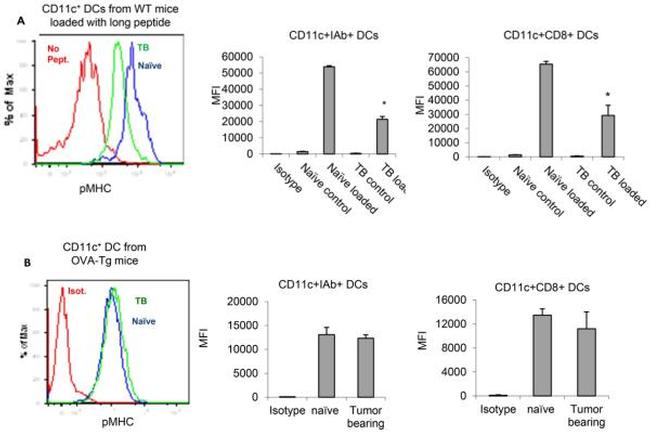
-peptide-bound-to-H-2Kb-Flow-20170216130641.jpg?time=20220827 "OVA257-264 (SIINFEKL) peptide bound to H-2Kb Antibody in Flow Cytometry (Flow)")
-peptide-bound-to-H-2Kb-Flow-20170216130641.jpg?time=20220827)

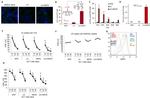
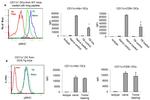
-peptide-bound-to-H-2Kb-Flow-20170216130641.jpg?time=20220827?time=20220827 "OVA257-264 (SIINFEKL) peptide bound to H-2Kb Antibody (14-5743-81) in Flow")