Mouse IL-4 Platinum ELISA

Also known as: B-cell stimulatory factor 1, B cell growth factor 1

RUO: For Research Use Only. Not for use in diagnostic procedures.

SKU# BMS613*

Cat. No. Size
BMS613 96 tests
BMS613TWO 2 x 96 tests
BMS613TEN 10 x 96 tests
Please inquire about custom configurations or bulk packaging.

To enable ordering, please select your country. Cookies will need to be enabled to continue on our website. View our Privacy Policy.

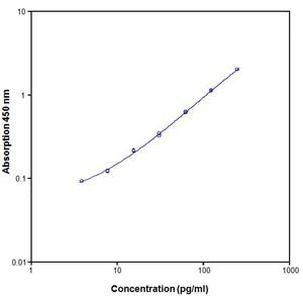
Data for Mouse IL-4 Platinum ELISA.

Click on image to view more information.

  • Data for Mouse IL-4 Platinum ELISA.
Description

Description: The mouse IL-4 ELISA is an enzyme-linked immunosorbent assay for the quantitative detection of mouse IL-4. The mouse IL-4 ELISA is for research use only. Not for diagnostic or therapeutic procedures.

IL-4 mediates its function by binding to receptors expressed on target cells. The IL-4 receptors exhibit an affinity of approximately 10-10 M.
Receptors exist on freshly prepared B and T lymphocytes and macrophages, as well as on various cell lines including lymphoid cells, mast cell lines, a variety of other hematopoietic cell lines, fibroblasts and stromal cell lines. On T and B cells, receptors are present in low numbers (appr. 400), which are reported to be upregulated by IL-2 and IL-4.

IL-4 is produced by a particular subset of T helper cells, the TH2 cells. These cells tend to make a specific set of lymphokines including IL-4, IL-5, IL-6, IL-10, IL-13 and GM-CSF and fail to produce IL-2, IFN-gamma, and lymphotoxin (TNF-beta). Apart from T cells, it has been shown that mast cells can produce IL-4.
IL-4 exerts numerous effects on various hematopoietic cell types. On B cells, IL-4 promotes immunological class switching to IgE and IgG1 isotypes and upregulates MHC class II and CD23 expression. It can promote survival, growth, and differentiation of both T and B lymphocytes, mast cells, and endothelial cells. In addition, IL-4 can inhibit the production of TNF, IL-1, and IL-6 by macrophages.

Details
Reactivity Mouse
Sample Volume 50 uL
Suitable Sample Types cell culture supernatant, serum
Sensitivity 2.0 pg/mL
Standard Curve Range 3.9 - 250 pg/mL
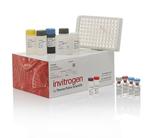
Components Aluminium pouch(es) with a Microwell Plate coated with monoclonal antibody to mouse IL-4
Biotin-Conjugate anti-mouse IL-4 monoclonal antibody
Streptavidin-HRP
Mouse IL-4 Standard lyophilized, 500 pg/ml upon reconstitution
Sample Diluent
Assay Buffer Concentrate 20x (PBS with 1% Tween 20 and 10% BSA)
Wash Buffer Concentrate 20x (PBS with 1% Tween 20)
Substrate Solution (tetramethyl-benzidine)
top Solution (1M Phosphoric acid)
Blue-Dye
Green-Dye
Red-Dye
Adhesive Films
Reported Applications ELISA
Documentation

For complete product information, please download the TDS or IFU document.

TDS Link Download TDS
Additional Formats
References

Citations: Ding,Qing; Lu,Liming; Wang,Baolong; Zhou,Yun; Jiang,Yang; Zhou,Xiaorong; Xin,Lijun; Jiao,Zhijun; Chou,Kuang Yen. B7H1-Ig Fusion Protein Activates the CD4+ IFN-{gamma} Receptor+ Type 1 T Regulatory Subset through IFN-{gamma}-Secreting Th1 Cells. The Journal of Immunology 2006;177:3606-3614. (Link)

Aragane,Yoshinori; Maeda,Akira; Schwarz,Agatha; Tezuka,Tadashi; Ariizumi,Kiyoshi; Schwarz,Thomas. Involvement of Dectin-2 in Ultraviolet Radiation-Induced Tolerance. The Journal of Immunology 2003;171:3801-3807. (Link)

Woods,Anne; Soulas-Sprauel,Pauline; Jaulhac,Benoit; Arditi,Berenice; Knapp,Anne Marie; Pasquali,Jean Louis; Korganow,Anne Sophie; Martin,Thierry. MyD88 Negatively Controls Hypergammaglobulinemia with Autoantibody Production during Bacterial Infection. Infection and Immunity 2008;76:1657-1667. (Link)

Zhang,S.; Guo,Y.J.; Sun,S.H.; Wang,K.Y.; Wang,K.H.; Zhang,Y.; Zhu,W.J.; Chen,Z.H.; Jiang,L.. DNA Vaccination Using Bacillus Calmette-Guerin-DNA as an Adjuvant to Enhance Immune Response to Three Kinds of Swine Diseases. Scandinavian Journal of Immunology 2005;62:371-377. (Link)

Komlosi,Z.I.; Pozsonyi,E.; Tabi,T.; Szoko,E.; Nagy,A.; Bartos,B.; Kozma,G.T.; Tamasi,L.; Orosz,M.; Magyar,P.; Losonczy,G.. Lipopolysaccharide exposure makes allergic airway inflammation and hyper-responsiveness less responsive to dexamethasone and inhibition of iNOS. Clin.Exp.Allergy 2006;36:951-959. (Link)

MALLA,N.; YADAV,M.; GUPTA,I.. Kinetics of serum and local cytokine profile in experimental intravaginal trichomoniasis induced with Trichomonas vaginalis isolates from symptomatic and asymptomatic women. Parasite Immunology 2006;29:101-105. (Link)

Iniesta,Virginia; Carcelen,Jesualdo; Molano,Isabel; Peixoto,Pablo M.V.; Redondo,Eloy; Parra,Pilar; Mangas,Marina; Monroy,Isabel; Campo,Maria Luisa; Nieto,Carlos Gomez; Corraliza,Ines. Arginase I Induction during Leishmania major Infection Mediates the Development of Disease. Infection and Immunity 2005;73:6085-6090. (Link)

References: Kikutani,H.; Inui,S.; Sato,R.; Barsumian,E.L.; Owaki,H.; Yamasaki,K.; Kaisho,T.; Uchibayashi,N.; Hardy,R.R.; Hirano,T.; .. Molecular structure of human lymphocyte receptor for immunoglobulin E. Cell 1986;47:657-665. (Link)

Hamaguchi,Y.; Kanakura,Y.; Fujita,J.; Takeda,S.; Nakano,T.; Tarui,S.; Honjo,T.; Kitamura,Y.. Interleukin 4 as an essential factor for in vitro clonal growth of murine connective tissue-type mast cells. J.Exp.Med. 1987;165:268-273. (Link)

Lee,J.D.; Swisher,S.G.; Minehart,E.H.; McBride,W.H.; Economou,J.S.. Interleukin-4 downregulates interleukin-6 production in human peripheral blood mononuclear cells. J.Leukoc.Biol. 1990;47:475-479. (Link)

Plaut,M.; Pierce,J.H.; Watson,C.J.; Hanley-Hyde,J.; Nordan,R.P.; Paul,W.E.. Mast cell lines produce lymphokines in response to cross-linkage of Fc epsilon RI or to calcium ionophores. Nature 1989;339:64-67. (Link)

Puri,R.K.; Finbloom,D.S.; Leland,P.; Mostowski,H.; Siegel,J.P.. Expression of high-affinity IL-4 receptors on murine tumour infiltrating lymphocytes and their up-regulation by IL-2. Immunology 1990;70:492-497. (Link)

Sideras,P.; Bergstedt-Lindqvist,S.; MacDonald,H.R.; Severinson,E.. Secretion of IgG1 induction factor by T cell clones and hybridomas. Eur.J.Immunol. 1985;15:586-593. (Link)

Lowenthal,J.W.; Castle,B.E.; Christiansen,J.; Schreurs,J.; Rennick,D.; Arai,N.; Hoy,P.; Takebe,Y.; Howard,M.. Expression of high affinity receptors for murine interleukin 4 (BSF-1) on hemopoietic and nonhemopoietic cells. J.Immunol. 1988;140:456-464. (Link)

Park,L.S.; Friend,D.; Grabstein,K.; Urdal,D.L.. Characterization of the high-affinity cell-surface receptor for murine B-cell-stimulating factor 1. Proc.Natl.Acad.Sci.U.S.A 1987;84:1669-1673. (Link)

Brown,M.; Hu-Li,J.; Paul,W.E.. IL-4/B cell stimulatory factor 1 stimulates T cell growth by an IL-2-independent mechanism. J.Immunol. 1988;141:504-511. (Link)

Foxwell,B.M.; Woerly,G.; Ryffel,B.. Identification of interleukin 4 receptor-associated proteins and expression of both high- and low-affinity binding on human lymphoid cells. Eur.J.Immunol. 1989;19:1637-1641. (Link)

Spits,H.; Yssel,H.; Paliard,X.; Kastelein,R.; Figdor,C.; de Vries,J.E.. IL-4 inhibits IL-2-mediated induction of human lymphokine-activated killer cells, but not the generation of antigen-specific cytotoxic T lymphocytes in mixed leukocyte cultures. J.Immunol. 1988;141:29-36. (Link)

Toi,M.; Harris,A.L.; Bicknell,R.. Interleukin-4 is a potent mitogen for capillary endothelium. Biochem.Biophys.Res.Commun. 1991;174:1287-1293. (Link)

Hart,P.H.; Vitti,G.F.; Burgess,D.R.; Whitty,G.A.; Piccoli,D.S.; Hamilton,J.A.. Potential antiinflammatory effects of interleukin 4: suppression of human monocyte tumor necrosis factor alpha, interleukin 1, and prostaglandin E2. Proc.Natl.Acad.Sci.U S A 1989;86:3803-3807. (Link)

Coffman,R.L.; Ohara,J.; Bond,M.W.; Carty,J.; Zlotnik,A.; Paul,W.E.. B cell stimulatory factor-1 enhances the IgE response of lipopolysaccharide-activated B cells. J.Immunol. 1986;136:4538-4541. (Link)

Grabstein,K.H.; Park,L.S.; Morrissey,P.J.; Sassenfeld,H.; Price,V.; Urdal,D.L.; Widmer,M.B.. Regulation of murine T cell proliferation by B cell stimulatory factor-1. J.Immunol. 1987;139:1148-1153. (Link)

Roehm,N.W.; Leibson,H.J.; Zlotnik,A.; Kappler,J.; Marrack,P.; Cambier,J.C.. Interleukin-induced increase in Ia expression by normal mouse B cells. J.Exp.Med. 1984;160:679-694. (Link)

Mosmann,T.R.; Bond,M.W.; Coffman,R.L.; Ohara,J.; Paul,W.E.. T-cell and mast cell lines respond to B-cell stimulatory factor 1. Proc.Natl.Acad.Sci.U.S.A 1986;83:5654-5658. (Link)