Search Thermo Fisher Scientific
Product Specifications
Analytical sensitivity
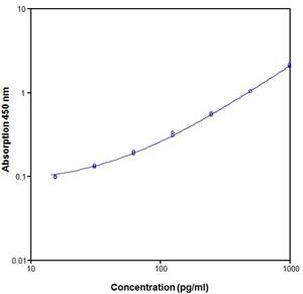
6 pg/mL
Assay range
15.6-1,000 pg/mL
Sample type/volume
Serum
10 µL
Supernatant
10 µL
Hands-on time
1 hr 20 min
Time-to-result
2 hr 10 min
Homogenous (no wash)
No
Interassay CV
6.5%
Intraassay CV
3.6%
Instrument
Colorimetric Microplate Reader
Product size
96 Tests
Contents
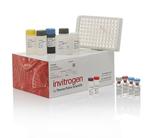
Pre-coated 96 well plate
Standard
Sample Diluent
Assay Buffer concentrate
HRP-conjugated Detection Antibody
Wash Buffer
Chromogen
Stop Solution
Controls
Adhesive Plate Covers
Standard
Sample Diluent
Assay Buffer concentrate
HRP-conjugated Detection Antibody
Wash Buffer
Chromogen
Stop Solution
Controls
Adhesive Plate Covers
Shipping conditions
Wet ice
Storage
2-8°C
Protein name
tPA
Species (tested)
Human
Assay kit format
Sandwich ELISA Kit
Detector antibody conjugate
HRP
Label or dye
HRP
About This Kit
The Human Tissue-type Plasminogen Activator (t-PA) ELISA quantitates Hu t-PA in human serum, or cell culture medium. The assay will exclusively recognize both natural and recombinant Hu t-PA.
Principle of the method
The Human t-PA solid-phase sandwich ELISA (enzyme-linked immunosorbent assay) is designed to measure the amount of the target bound between a matched antibody pair. A target-specific antibody has been pre-coated in the wells of the supplied microplate. Samples, standards, or controls are then added into these wells and bind to the immobilized (capture) antibody. The sandwich is formed by the addition of the second (detector) antibody, a substrate solution is added that reacts with the enzyme-antibody-target complex to produce measurable signal. The intensity of this signal is directly proportional to the concentration of target present in the original specimen.
Rigorous validation
Each manufactured lot of this ELISA kit is quality tested for criteria such as sensitivity, specificity, precision, and lot-to-lot consistency. See manual for more information on validation.
Target information
TPA converts the abundant, but inactive, zymogen plasminogen to plasmin by hydrolyzing a single Arg-Val bond in plasminogen. By controlling plasmin-mediated proteolysis, it plays an important role in tissue remodeling and degradation, in cell migration and many other physio pathological events. It specifically cleaves the Arg- -Val bond in plasminogen to form plasmin, and is comprised of a heterodimer of chain A and chain B held by a disulfide bond. TPA binds to fibrin with high affinity. This interaction leads to an increase in the catalytic efficiency of the enzyme between 100-and 1000-fold, due to an increase in affinity for plasminogen. Similarly, binding to heparin increases the activation of plasminogen. Binding to laminin and fibronectin has also been demonstrated. TPA also binds to mannose receptor and the low-density lipoprotein receptor-related protein (LRP1). These proteins are involved in TPA clearance. TPA binds to annexin II and to cytokeratin 8. As yet unidentified interactions on endothelial cells and vascular smooth muscle cells (VSMC) lead to a 100-fold stimulation of plasminogen activation. In addition, binding to VSMC reduces TPA inhibition by PAI-1 by 30-fold.
For Research Use Only. Not for use in diagnostic procedures. Not for resale without express authorization.
Bioinformatics
Gene aliases : PLAT, T-PA, TPA
Gene ID : (Human) 5327
Gene symbol : PLAT
Protein Aliases : Alteplase, plasminogen/activator kringle, Reteplase, t-PA, t-plasminogen activator, tPA, Tissue-type plasminogen activator, Tissue-type plasminogen activator chain A, Tissue-type plasminogen activator chain B
UniProt ID (Human) P00750

Performance Guarantee
If an Invitrogen™ antibody doesn't perform as described on our website or datasheet,we'll replace the product at no cost to you, or provide you with a credit for a future purchase.*
Learn more
We're here to help
Get expert recommendations for common problems or connect directly with an on staff expert for technical assistance related to applications, equipment and general product use.
Contact tech support