Search Thermo Fisher Scientific
Disclaimer

Clicking the images or links will redirect you to a website hosted by BenchSci that provides third-party scientific content. Neither the content nor the BenchSci technology and processes for selection have been evaluated by us; we are providing them as-is and without warranty of any kind, including for use or application of the Thermo Fisher Scientific products presented.
Invitrogen
EOMES Monoclonal Antibody (WD1928), eFluor™ 660, eBioscience™
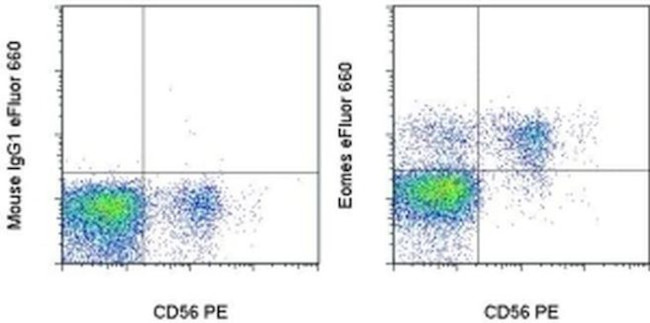
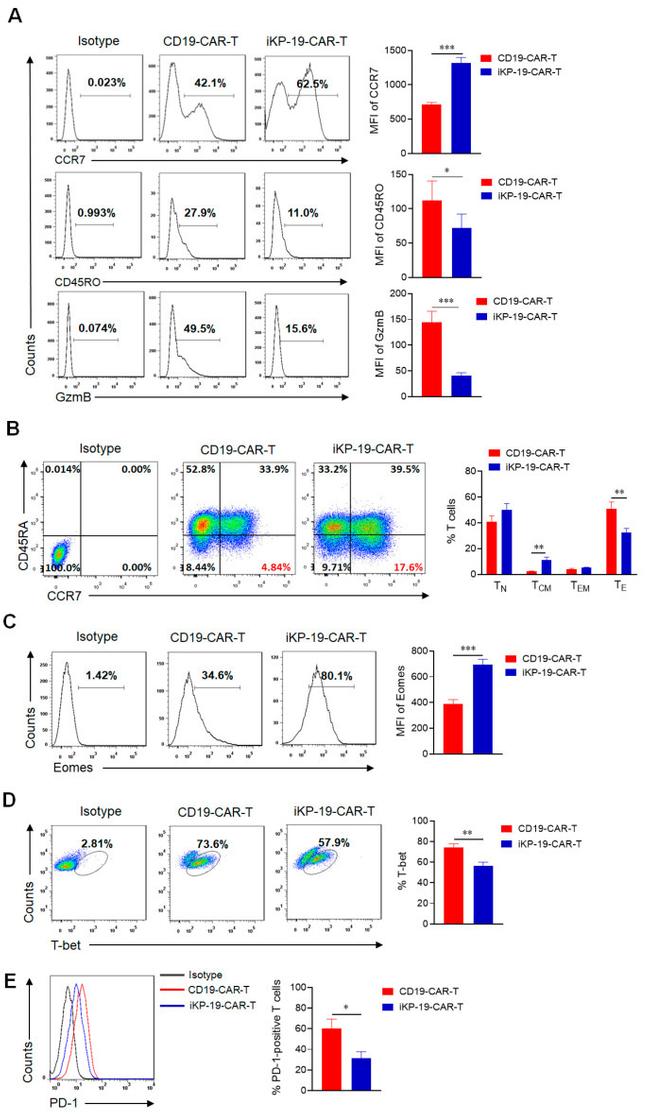
FIGURE: 1 / 18
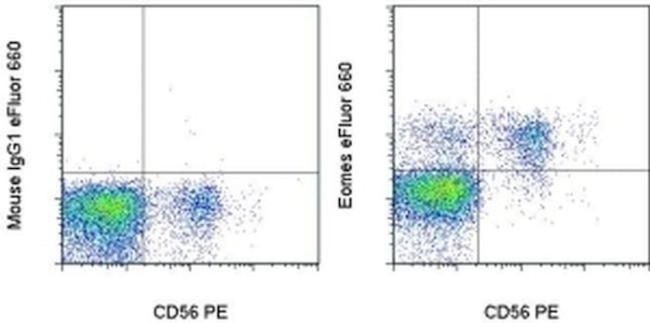
EOMES Antibody (50-4877-41) in Flow
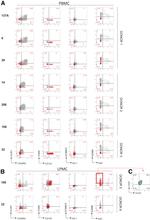
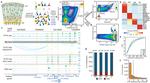
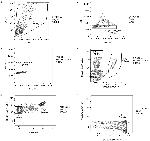
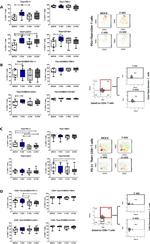
Staining of normal human peripheral blood cells with Anti-Human CD56 (NCAM) PE (Product # 12-0567-42) followed by fixation and permeabilization with the Foxp3/Transcription Factor Buffer Set (Product # 00-5523-00). Cells were subsequently stained intracellularly with Mouse IgG1 K Isotype Control eFluor® 660 (Product # 50-4714-82) (left) or Anti-Human Eomes eFluor® 660 (right). Cells in the lymphocyte gate were used for analysis.


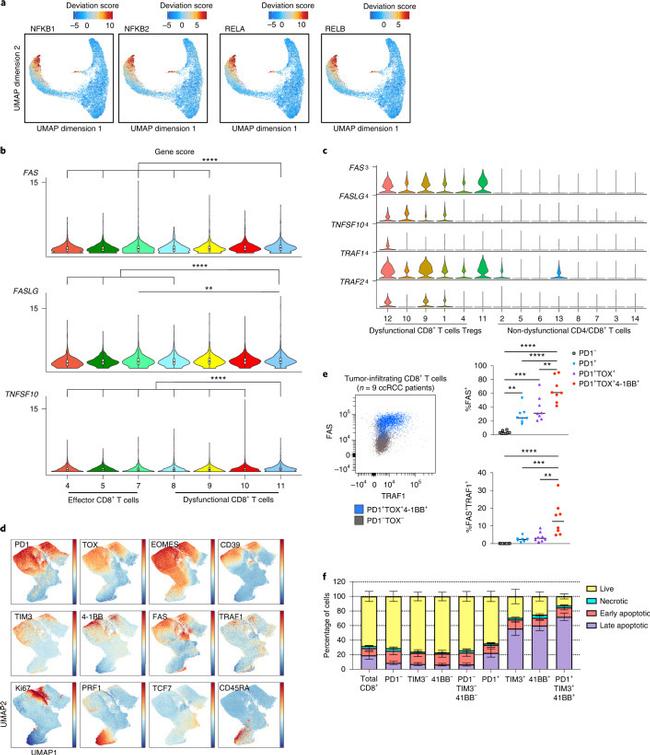
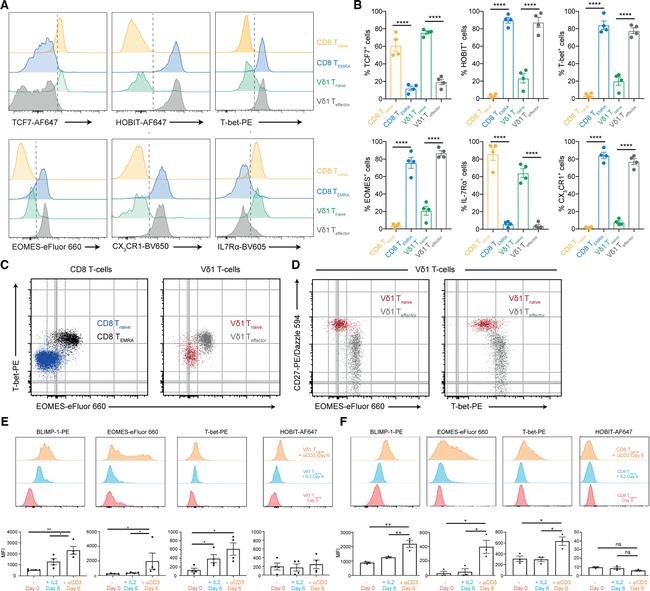
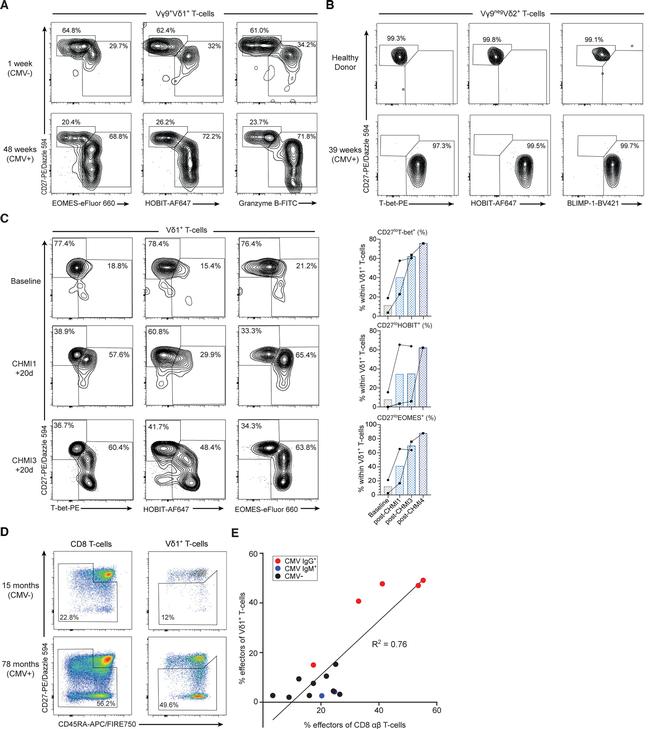
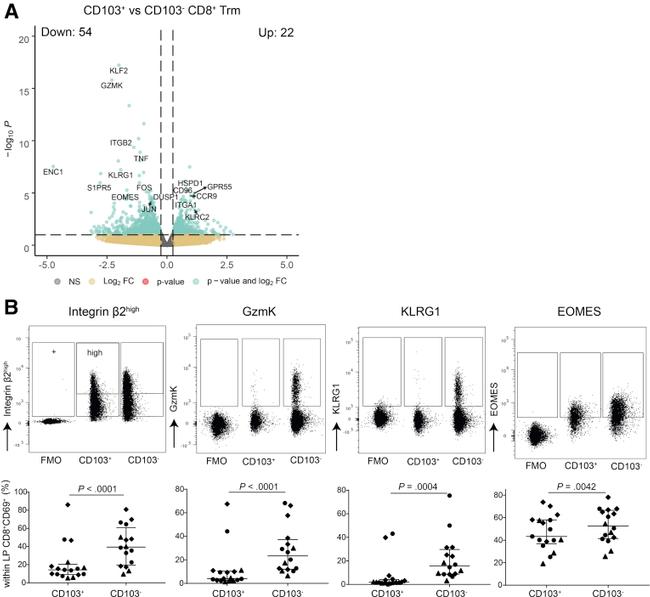

Product Details
50-4877-41
Applications
Tested Dilution
Publications
Product Specifications
Species Reactivity
Human,
Pig
Published species
Human
Host/Isotype
Mouse
/ IgG1, kappa
Recommended Isotype Control
Class
Monoclonal
Type
Antibody
Clone
WD1928
Conjugate
eFluor™ 660
Excitation/Emission Max
651/668 nm
View spectra

Form
Liquid
Concentration
5 µL/Test
Purification
Affinity chromatography
Storage buffer
PBS, pH 7.2, with 0.2% BSA
Contains
0.09% sodium azide
Storage conditions
4° C, store in dark, DO NOT FREEZE!
Shipping conditions
Wet ice
RRID
AB_2574228
Product Specific Information
Description: This WD1928 antibody recognizes Eomesodermin (Eomes), also known as T-box brain 2 (TBR2). Eomes is a T-box transcription factor that is highly homologous to T-bet, which is essential during trophoblast development and gastrulation in most vertebrates. In the immune system, Eomes controls the differentiation of effector and memory CD8+ T cells, as well as natural killer (NK) cells. Expression of Eomes in these cells correlates with high expression of CD122, the common beta-chain of the IL-2R and IL-15R.
Applications Reported:This WD1928 antibody has been reported for use in intracellular staining followed by flow cytometric analysis.
Applications Tested: This WD1928 antibody has been pre-titrated and tested by intracellular staining and flow cytometric analysis using the Foxp3/Transcription Factor Buffer Set (Product # 00-5523-00) and protocol. Please see Best Protocols Section (Staining intracellular Antigens for Flow Cytometry) for staining protocol (refer to Protocol B: One-step protocol for intracellular (nuclear) proteins). This can be used at 5 µL (0.03 µg) per test. A test is defined as the amount (µg) of antibody that will stain a cell sample in a final volume of 100 µL. Cell number should be determined empirically but can range from 10^5 to 10^8 cells/test.
eFluor® 660 is a replacement for Alexa Fluor® 647. eFluor® 660 emits at 659 nm and is excited with the red laser (633 nm). Please make sure that your instrument is capable of detecting this fluorochome.
Excitation: 633-647 nm; Emission: 668 nm; Laser: Red Laser.
Filtration: 0.2 µm post-manufacturing filtered.
Target Information
TBR2 is a member of a conserved protein family that shares a common DNA-binding domain, the T-box. T-box genes encode transcription factors involved in the regulation of developmental processes. A similiar protein disrupted in mice is shown to be essential during trophoblast development and gastrulation. TBR2 plays a role in brain development and is required for the specification and the proliferation of the intermediate progenitor cells and their progeny in the cerebral cortex.
For Research Use Only. Not for use in diagnostic procedures. Not for resale without express authorization.
Bioinformatics
Protein Aliases: Eomesodermin homolog; T-box brain protein 2; T-brain-2
Gene Aliases: EOMES; TBR2
UniProt ID: (Human) O95936
Entrez Gene ID: (Human) 8320, (Pig) 100622125
Molecular Function:
 Rel homology transcription factor
negative regulation of transcription from RNA polymerase II promoter
endoderm formation
mesoderm formation
endodermal cell fate specification
trophectodermal cell differentiation
adaptive immune response
CD8-positive, alpha-beta T cell differentiation involved in immune response
transcription, DNA-templated
brain development
cardioblast differentiation
stem cell population maintenance
olfactory bulb development
cerebral cortex regionalization
cerebral cortex neuron differentiation
interferon-gamma production
skeletal muscle cell differentiation
positive regulation of cell differentiation
regulation of neuron differentiation
positive regulation of transcription, DNA-templated
positive regulation of transcription from RNA polymerase II promoter
cell differentiation involved in embryonic placenta development
mesodermal to mesenchymal transition involved in gastrulation
RNA polymerase II regulatory region sequence-specific DNA binding
RNA polymerase II activating transcription factor binding
transcriptional repressor activity, RNA polymerase II transcription factor binding
DNA binding
chromatin binding
transcription factor activity, sequence-specific DNA binding
sequence-specific DNA binding

Performance Guarantee
If an Invitrogen™ antibody doesn't perform as described on our website or datasheet,we'll replace the product at no cost to you, or provide you with a credit for a future purchase.*
Learn more
We're here to help
Get expert recommendations for common problems or connect directly with an on staff expert for technical assistance related to applications, equipment and general product use.
Contact tech support