Product References
Active PD-L1 incorporation within HIV virions functionally impairs T follicular helper cells.
PLoS pathogens
Munoz O,Banga R,Schelling R,Procopio FA,Mastrangelo A,Nortier P,Ohmiti K,Daraspe J,Cavassini M,Fenwick C,Perez L,Perreau M
16-5983-82 was used in Immuno-assay to show that PD-L1 is incorporated within HIV virions through an active mechanism involving p17 HIV matrix protein.
Fri Jul 01 00:00:00 EDT 2022
Interleukin 6 regulates the expression of programmed cell death ligand 1 in thyroid cancer.
Cancer science
Zhang GQ,Jiao Q,Shen CT,Song HJ,Zhang HZ,Qiu ZL,Luo QY
16-5983 was used in Flow cytometry/Cell sorting to investigate the expression of IL-6 and PD-L1 in thyroid cancer, and whether IL-6 regulates the PD-L1 expression.
Mon Mar 01 00:00:00 EST 2021
CD19-targeted CAR regulatory T cells suppress B cell pathology without GvHD.
JCI insight
Imura Y,Ando M,Kondo T,Ito M,Yoshimura A
16-5983-82 was used in In vitro Assay to suggest that CD19-CAR regulatory T cells can treat autoantibody-mediated autoimmune diseases by suppressing B cell pathology.
Thu Jul 23 00:00:00 EDT 2020
MicroRNA-200a induces immunosuppression by promoting PTEN-mediated PD-L1 upregulation in osteosarcoma.
Aging
Liu Z,Wen J,Wu C,Hu C,Wang J,Bao Q,Wang H,Wang J,Zhou Q,Wei L,Shen Y,Zhang W
16-5983 was used in Flow cytometry/Cell sorting to provide important and novel insight into a regulatory axis involving microRNA-200a/PTEN/ PD-L1 axis, which determines osteosarcoma growth and the efficacy of PD-L1-targeted immunotherapy.
Fri Jan 24 00:00:00 EST 2020
EBV-associated gastric cancer evades T-cell immunity by PD-1/PD-L1 interactions.
Gastric cancer : official journal of the International Gastric Cancer Association and the Japanese Gastric Cancer Association
Sasaki S,Nishikawa J,Sakai K,Iizasa H,Yoshiyama H,Yanagihara M,Shuto T,Shimokuri K,Kanda T,Suehiro Y,Yamasaki T,Sakaida I
16-5983 was used in Flow cytometry/Cell sorting to evaluate the PD-L1 expression and function in Epstein-Barr virus-associated gastric cancer.
Wed May 01 00:00:00 EDT 2019
Elevated Soluble PD-L1 in Pregnant Women's Serum Suppresses the Immune Reaction.
Frontiers in immunology
Okuyama M,Mezawa H,Kawai T,Urashima M
16-5983-82 was used in Inhibition Assays to clarify the role of sPD-L1 in the sera of pregnant women as an immunosuppressive molecule by in vitro assays.
Tue Dec 31 00:00:00 EST 2019
The PD-L1- and IL6-mediated dampening of the IL27/STAT1 anticancer responses are prevented by α-PD-L1 or α-IL6 antibodies.
Journal of leukocyte biology
Rolvering C,Zimmer AD,Ginolhac A,Margue C,Kirchmeyer M,Servais F,Hermanns HM,Hergovits S,Nazarov PV,Nicot N,Kreis S,Haan S,Behrmann I,Haan C
16-5983 was used in Functional assays to study the effects of α-PD-L1 or α-IL6 antibodies in preventing the dampening of the IL27/STAT1 anticancer responses.
Thu Nov 01 00:00:00 EDT 2018
A versatile T cell-based assay to assess therapeutic antigen-specific PD-1-targeted approaches.
Oncotarget
Versteven M,Van den Bergh JMJ,Broos K,Fujiki F,Campillo-Davo D,De Reu H,Morimoto S,Lecocq Q,Keyaerts M,Berneman Z,Sugiyama H,Van Tendeloo VFI,Breckpot K,Lion E
16-5983 was used in Neutralization experiments to develop an antigen-specific, short-term and high-throughput T cell assay with versatile readout possibilities.
Tue Jun 12 00:00:00 EDT 2018
Similarities and differences between helminth parasites and cancer cell lines in shaping human monocytes: Insights into parallel mechanisms of immune evasion.
PLoS neglected tropical diseases
Narasimhan PB,Akabas L,Tariq S,Huda N,Bennuru S,Sabzevari H,Hofmeister R,Nutman TB,Tolouei Semnani R
16-5983 was used in Flow cytometry/Cell sorting to suggest that despite the fact that helminth parasites and cancer cell lines are extraordinarily disparate, they share the ability to alter the phenotype of human monocytes.
Sun Apr 01 00:00:00 EDT 2018
Poly(I:C) primes primary human glioblastoma cells for an immune response invigorated by PD-L1 blockade.
Oncoimmunology
De Waele J,Marcq E,Van Audenaerde JR,Van Loenhout J,Deben C,Zwaenepoel K,Van de Kelft E,Van der Planken D,Menovsky T,Van den Bergh JM,Willemen Y,Pauwels P,Berneman ZN,Lardon F,Peeters M,Wouters A,Smits EL
16-5983 was used in Functional assays to study the combination of poly(I:C) and PD-L1 blockade to invigorate the immune checkpoint inhibition response in glioblastoma.
Tue Jan 12 00:00:00 EST 2021
Structure-guided development of a high-affinity human Programmed Cell Death-1: Implications for tumor immunotherapy.
EBioMedicine
Lázár-Molnár E,Scandiuzzi L,Basu I,Quinn T,Sylvestre E,Palmieri E,Ramagopal UA,Nathenson SG,Guha C,Almo SC
16-5983 was used in Flow cytometry/Cell sorting to highlight the value of structural considerations in the design of a PD-1 Ig fusion protein with immune modulatory properties.
Wed Mar 01 00:00:00 EST 2017
Polyfunctional Melan-A-specific tumor-reactive CD8(+) T cells elicited by dacarbazine treatment before peptide-vaccination depends on AKT activation sustained by ICOS.
Oncoimmunology
Franzese O,Palermo B,Di Donna C,Sperduti I,Ferraresi V,Stabile H,Gismondi A,Santoni A,Nisticò P
16-5983 was used in Functional assays to investigate polyfunctionality of CD8(+) T cells relating to AKT activation.
Sun May 01 00:00:00 EDT 2016
Regulation of Gag- and Env-Specific CD8+ T Cell Responses in ART-Naïve HIV-Infected Patients: Potential Implications for Individualized Immunotherapy.
PloS one
Prebensen C,Lind A,Dyrhol-Riise AM,Kvale D
16-5983 was used in Blocking experiments to discover the substantial heterogeneity in functional T cell regulation between patients, inhibitory pathways and HIV antigens.
Tue Feb 21 00:00:00 EST 2017
A fully human IgG1 anti-PD-L1 MAb in an in vitro assay enhances antigen-specific T-cell responses.
Clinical & translational immunology
Grenga I,Donahue RN,Lepone LM,Richards J,Schlom J
16-5983 was used in Blocking experiments to explore the effects of Avelumab: a checkpoint-blocking mAB targeting PD-L1, on the immune responses in antigen-specific IVS assays.
Sun May 01 00:00:00 EDT 2016
Lenalidomide Enhances Immune Checkpoint Blockade-Induced Immune Response in Multiple Myeloma.
Clinical cancer research : an official journal of the American Association for Cancer Research
Görgün G,Samur MK,Cowens KB,Paula S,Bianchi G,Anderson JE,White RE,Singh A,Ohguchi H,Suzuki R,Kikuchi S,Harada T,Hideshima T,Tai YT,Laubach JP,Raje N,Magrangeas F,Minvielle S,Avet-Loiseau H,Munshi NC,Dorfman DM,Richardson PG,Anderson KC
16-5983 was used in Flow cytometry/Cell sorting to demonstrate that checkpoint signaling plays an important role in providing the tumor-promoting, immune-suppressive microenvironment in multiple myeloma.
Thu Oct 15 00:00:00 EDT 2015
Manipulating the tumor microenvironment ex vivo for enhanced expansion of tumor-infiltrating lymphocytes for adoptive cell therapy.
Clinical cancer research : an official journal of the American Association for Cancer Research
Chacon JA,Sarnaik AA,Chen JQ,Creasy C,Kale C,Robinson J,Weber J,Hwu P,Pilon-Thomas S,Radvanyi L
16-5983 was used in Functional assays to demonstrate that the activation of the 4-1BB co-stimulatory pathway in melanoma tumor fragments, enhances CD8+ T-cell output, tumor-infiltrating lymphocyte tumor reactivity, and memory properties.
Sun Feb 01 00:00:00 EST 2015
The upregulation of LAG-3 on T cells defines a subpopulation with functional exhaustion and correlates with disease progression in HIV-infected subjects.
Journal of immunology (Baltimore, Md. : 1950)
Tian X,Zhang A,Qiu C,Wang W,Yang Y,Qiu C,Liu A,Zhu L,Yuan S,Hu H,Wang W,Wei Q,Zhang X,Xu J
16-5983 was used in Blocking experiments to study the role of LAG-3 on T cell functionality during persistent HIV-1 infection.
Wed Apr 15 00:00:00 EDT 2015
Upregulation of Programmed Death-1 and Its Ligand in Cardiac Injury Models: Interaction with GADD153.
PloS one
Baban B,Liu JY,Qin X,Weintraub NL,Mozaffari MS
16-5983 was used in Blocking experiments to suggest that upregulation of the PD-1/PD-L1 pathway mediates tissue damage, likely through a paracrine mechanism.
Tue Apr 12 00:00:00 EDT 2016
Blockade of the programmed death-1 pathway restores sarcoidosis CD4(+) T-cell proliferative capacity.
American journal of respiratory and critical care medicine
Braun NA,Celada LJ,Herazo-Maya JD,Abraham S,Shaginurova G,Sevin CM,Grutters J,Culver DA,Dworski R,Sheller J,Massion PP,Polosukhin VV,Johnson JE,Kaminski N,Wilkes DS,Oswald-Richter KA,Drake WP
16-5983 was used in Blocking experiments to determine the effects of PD-1 pathway blockade on sarcoidosis CD4(+) T-cell proliferative capacity, showing that blockade restores proliferative capacity, making it a possible therapeutic target.
Mon Sep 01 00:00:00 EDT 2014
Staphylococcus aureus convert neonatal conventional CD4(+) T cells into FOXP3(+) CD25(+) CD127(low) T cells via the PD-1/PD-L1 axis.
Immunology
Rabe H,Nordström I,Andersson K,Lundell AC,Rudin A
16-5983 was used in Functional assays to suggest that newborns have a higher proportion of circulating thymically derived Helios(+) Treg cells than adults.
Sat Mar 01 00:00:00 EST 2014
Adoptive TIL transfer in the adjuvant setting for melanoma: long-term patient survival.
Journal of immunology research
Khammari A,Knol AC,Nguyen JM,Bossard C,Denis MG,Pandolfino MC,Quéreux G,Bercegeay S,Dréno B
16-5983 was used in Immunohistochemistry to confirm association of long-term patient survival with the presence of specific TILs and a decrease in Foxp3 expression.
Wed Jan 07 00:00:00 EST 2015
Role of programmed death ligands in effective T-cell interactions in extranodal natural killer/T-cell lymphoma.
Oncology letters
Han L,Liu F,Li R,Li Z,Chen X,Zhou Z,Zhang X,Hu T,Zhang Y,Young K,Sun S,Wen J,Zhang M
16-5983 was used in Functional assays to analyze the expression of programmed death 1/programmed death ligand in ENKL cell lines and tissues.
Wed Oct 01 00:00:00 EDT 2014
B7-H3 and B7-H1 expression in cerebral spinal fluid and tumor tissue correlates with the malignancy grade of glioma patients.
Oncology letters
Baral A,Ye HX,Jiang PC,Yao Y,Mao Y
16-5983 was used in Immunohistochemistry to examine the expression of B7 molecules in cerebral spinal fluid and tumour tissue, in relation to malignancy grade in glioma patients.
Mon Sep 01 00:00:00 EDT 2014
Synergistic effects of IL-4 and TNFα on the induction of B7-H1 in renal cell carcinoma cells inhibiting allogeneic T cell proliferation.
Journal of translational medicine
Quandt D,Jasinski-Bergner S,Müller U,Schulze B,Seliger B
16-5983 was used in Functional assays to investigate the cellular alterations observable in tumour cells upon cytokine treatment.
Fri May 30 00:00:00 EDT 2014
SHP-1 phosphatase activity counteracts increased T cell receptor affinity.
The Journal of clinical investigation
Hebeisen M,Baitsch L,Presotto D,Baumgaertner P,Romero P,Michielin O,Speiser DE,Rufer N
16-5983 was used in Blocking experiments to highlight an unexpected and global role of SHP-1 in regulating CD8(+) T cell activation and responsiveness.
Fri Mar 01 00:00:00 EST 2013
Monocytes regulate the mechanism of T-cell death by inducing Fas-mediated apoptosis during bacterial infection.
PLoS pathogens
Daigneault M,De Silva TI,Bewley MA,Preston JA,Marriott HM,Mitchell AM,Mitchell TJ,Read RC,Whyte MK,Dockrell DH
16-5983 was used in Neutralization experiments to elucidate the mechanisms that regulate levels of activated T-cells at sites of acute bacterial infection.
Tue Jan 29 00:00:00 EST 2013
B7-H1, which represses EBV-immortalized B cell killing by autologous T and NK cells, is oppositely regulated by c-Myc and EBV latency III program at both mRNA and secretory lysosome levels.
Journal of immunology (Baltimore, Md. : 1950)
Durand-Panteix S,Farhat M,Youlyouz-Marfak I,Rouaud P,Ouk-Martin C,David A,Faumont N,Feuillard J,Jayat-Vignoles C
16-5983 was used in Flow cytometry/Cell sorting to explore the role of B7-H1 expression in the context of EBV-immortalised B cell killing.
Sun Jul 01 00:00:00 EDT 2012
B7-H1, which represses EBV-immortalized B cell killing by autologous T and NK cells, is oppositely regulated by c-Myc and EBV latency III program at both mRNA and secretory lysosome levels.
Journal of immunology (Baltimore, Md. : 1950)
Durand-Panteix S,Farhat M,Youlyouz-Marfak I,Rouaud P,Ouk-Martin C,David A,Faumont N,Feuillard J,Jayat-Vignoles C
16-5983 was used in Flow cytometry/Cell sorting to explore the role of B7-H1 expression in the context of EBV-immortalised B cell killing.
Sun Jul 01 00:00:00 EDT 2012
Identification of a soluble form of B7-H1 that retains immunosuppressive activity and is associated with aggressive renal cell carcinoma.
Clinical cancer research : an official journal of the American Association for Cancer Research
Frigola X,Inman BA,Lohse CM,Krco CJ,Cheville JC,Thompson RH,Leibovich B,Blute ML,Dong H,Kwon ED
16-5983 was used in Flow cytometry/Cell sorting to determine whether sB7-H1 levels are associated with pathologic features and patient outcome in clear cell renal cell carcinoma.
Fri Apr 01 00:00:00 EDT 2011
T-cell immune function in tumor, skin, and peripheral blood of advanced stage melanoma patients: implications for immunotherapy.
Clinical cancer research : an official journal of the American Association for Cancer Research
Tjin EP,Konijnenberg D,Krebbers G,Mallo H,Drijfhout JW,Franken KL,van der Horst CM,Bos JD,Nieweg OE,Kroon BB,Haanen JB,Melief CJ,Vyth-Dreese FA,Luiten RM
16-5983 was used in Immunohistochemistry to investigate T-cell effector function in relation to tumour-escape mechanisms.
Thu Sep 01 00:00:00 EDT 2011
Dual function of the NK cell receptor 2B4 (CD244) in the regulation of HCV-specific CD8+ T cells.
PLoS pathogens
Schlaphoff V,Lunemann S,Suneetha PV,Jaroszewicz J,Grabowski J,Dietz J,Helfritz F,Bektas H,Sarrazin C,Manns MP,Cornberg M,Wedemeyer H
16-5983 was used in Blocking experiments to analyse the role of 2B4 as an additional costimulatory receptor regulating CD8+ T cell function.
Sun May 01 00:00:00 EDT 2011
Phagocytosis, a potential mechanism for myeloid-derived suppressor cell regulation of CD8+ T cell function mediated through programmed cell death-1 and programmed cell death-1 ligand interaction.
Journal of immunology (Baltimore, Md. : 1950)
Kim YJ,Park SJ,Broxmeyer HE
16-5983 was used in Flow cytometry/Cell sorting to identify a potential mechanism by which IFN-γ-producing CD8(+) T cells are tolerised after type 1 immune responses to chronic virus or tumour.
Thu Sep 01 00:00:00 EDT 2011
Impaired hepatitis B vaccine responses during chronic hepatitis C infection: involvement of the PD-1 pathway in regulating CD4(+) T cell responses.
Vaccine
Moorman JP,Zhang CL,Ni L,Ma CJ,Zhang Y,Wu XY,Thayer P,Islam TM,Borthwick T,Yao ZQ
16-5983-82 was used in Flow Cytometry to investigate the role of the PD-1 pathway in regulation of CD4(+) T cell responses to hepatitis B virus vaccination in hepatitis C virus-infected individuals.
Tue Apr 12 00:00:00 EDT 2011
Upregulation of Tim-3 and PD-1 expression is associated with tumor antigen-specific CD8+ T cell dysfunction in melanoma patients.
The Journal of experimental medicine
Fourcade J,Sun Z,Benallaoua M,Guillaume P,Luescher IF,Sander C,Kirkwood JM,Kuchroo V,Zarour HM
16-5983 was used in Blocking experiments to support the use of Tim-3-Tim-3L and PD-1-PD-L1 blockade together to reverse tumor-induced T cell exhaustion/dysfunction in patients with advanced melanoma.
Mon Sep 27 00:00:00 EDT 2010
Cytokine induced expression of programmed death ligands in human neutrophils.
Immunology letters
Bankey PE,Banerjee S,Zucchiatti A,De M,Sleem RW,Lin CF,Miller-Graziano CL,De AK
16-5983 was used in Flow cytometry/Cell sorting to reveal a possible immunoregulatory role for human neutrophils in adaptive immunity.
Thu Apr 08 00:00:00 EDT 2010
Programmed Death-1 expression on Epstein Barr virus specific CD8+ T cells varies by stage of infection, epitope specificity, and T-cell receptor usage.
PloS one
Greenough TC,Campellone SC,Brody R,Jain S,Sanchez-Merino V,Somasundaran M,Luzuriaga K
Thu Sep 23 00:00:00 EDT 2010
Profile of tumor antigen-specific CD8 T cells in patients with hepatitis B virus-related hepatocellular carcinoma.
Gastroenterology
Gehring AJ,Ho ZZ,Tan AT,Aung MO,Lee KH,Tan KC,Lim SG,Bertoletti A
16-5983-82 was used in Functional assay to characterise the phenotypes of tumour antigen-specific CD8 T cells in patients with hepatitis B virus-related hepatocellular carcinoma.
Sat Aug 01 00:00:00 EDT 2009
Regulatory T cells differentially modulate the maturation and apoptosis of human CD8+ T-cell subsets.
Blood
Nikolova M,Lelievre JD,Carriere M,Bensussan A,Lévy Y
16-5983 was used in Blocking experiments to demonstrate that regulatory T cells exert differential effects on CD8+ T cell subsets.
Thu May 07 00:00:00 EDT 2009
B7-H1 is correlated with malignancy-grade gliomas but is not expressed exclusively on tumor stem-like cells.
Neuro-oncology
Yao Y,Tao R,Wang X,Wang Y,Mao Y,Zhou LF
16-5983 was used in Immunohistochemistry to establish a correlation between the expression of the negative costimulatory molecule B7-H1 and the malignancy grade of human gliomas.
Tue Dec 01 00:00:00 EST 2009
Neuron-interacting satellite glial cells in human trigeminal ganglia have an APC phenotype.
Journal of immunology (Baltimore, Md. : 1950)
van Velzen M,Laman JD,Kleinjan A,Poot A,Osterhaus AD,Verjans GM
16-5983 was used in Immunohistochemistry on frozen tissues to indicate a role for TG-glial cells as resident APCs with potential T cell modulatory properties.
Sat Aug 15 00:00:00 EDT 2009
PD-1 is a regulator of NY-ESO-1-specific CD8+ T cell expansion in melanoma patients.
Journal of immunology (Baltimore, Md. : 1950)
Fourcade J,Kudela P,Sun Z,Shen H,Land SR,Lenzner D,Guillaume P,Luescher IF,Sander C,Ferrone S,Kirkwood JM,Zarour HM
16-5983 was used in Functional assays to investigate the role of PD-1 in impairing spontaneous tumour Ag-specific CD8(+) T cells in melanoma patients.
Fri May 01 00:00:00 EDT 2009
PD-L1 expression on human ocular cells and its possible role in regulating immune-mediated ocular inflammation.
Investigative ophthalmology & visual science
Yang W,Li H,Chen PW,Alizadeh H,He Y,Hogan RN,Niederkorn JY
16-5983 was used in Immunohistochemistry to show that the expression of PD-L1 on human ocular cells inhibits the production of proinflammatory cytokines and a Th2 cytokine.
Thu Jan 01 00:00:00 EST 2009
PD-L1 expression on human ocular cells and its possible role in regulating immune-mediated ocular inflammation.
Investigative ophthalmology & visual science
Yang W,Li H,Chen PW,Alizadeh H,He Y,Hogan RN,Niederkorn JY
16-5983 was used in Immunohistochemistry to show that the expression of PD-L1 on human ocular cells inhibits the production of proinflammatory cytokines and a Th2 cytokine.
Thu Jan 01 00:00:00 EST 2009
PD-L1: PD-1 interaction contributes to the functional suppression of T-cell responses to human uveal melanoma cells in vitro.
Investigative ophthalmology & visual science
Yang W,Chen PW,Li H,Alizadeh H,Niederkorn JY
16-5983 was used in Immunohistochemistry to imply that the presence of IFN-gamma in the tumor local microenvironment promotes upregulation of PD-L1 expression by uveal melanoma.
Sun Jun 01 00:00:00 EDT 2008
PD-1 is a regulator of virus-specific CD8+ T cell survival in HIV infection.
The Journal of experimental medicine
Petrovas C,Casazza JP,Brenchley JM,Price DA,Gostick E,Adams WC,Precopio ML,Schacker T,Roederer M,Douek DC,Koup RA
16-5983 was used in Flow cytometry/Cell sorting to demonstrate that PD-1 is a major regulator of apoptosis, impacting the frequency of antiviral T cells in chronic infections.
Mon Oct 02 00:00:00 EDT 2006
Expression of B7-H1 in inflammatory renal tubular epithelial cells.
Nephron. Experimental nephrology
Chen Y,Zhang J,Li J,Zou L,Zhao T,Tang Y,Wu Y
Fri Apr 21 00:00:00 EDT 2006
Expression of B7-H1 in inflammatory renal tubular epithelial cells.
Nephron. Experimental nephrology
Chen Y,Zhang J,Li J,Zou L,Zhao T,Tang Y,Wu Y
Fri Apr 21 00:00:00 EDT 2006
Clinical significance of programmed death-1 ligand-1 and programmed death-1 ligand-2 expression in human esophageal cancer.
Clinical cancer research : an official journal of the American Association for Cancer Research
Ohigashi Y,Sho M,Yamada Y,Tsurui Y,Hamada K,Ikeda N,Mizuno T,Yoriki R,Kashizuka H,Yane K,Tsushima F,Otsuki N,Yagita H,Azuma M,Nakajima Y
Fri Apr 15 00:00:00 EDT 2005


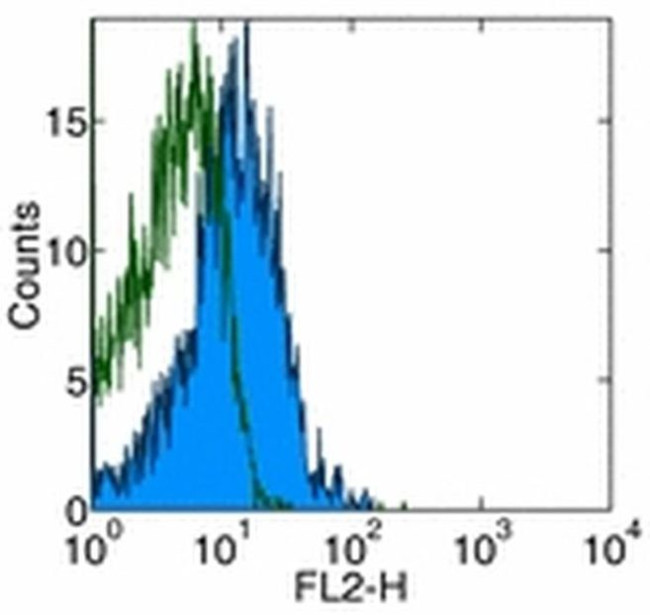
 immunoglobulin receptor superfamily

